
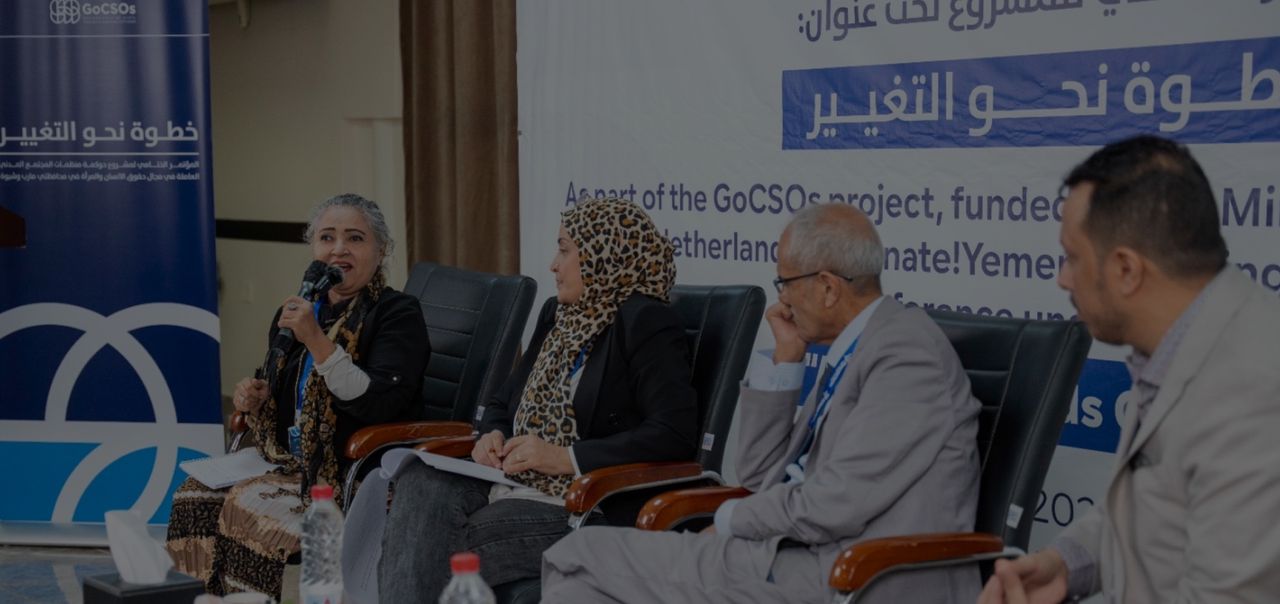
Governance of CSOs Working on Human Rights including Women’s Rights (GoCSOs) was developed in response to the shrinking civic space in Yemen and to the limited institutional, technical and financial capacities of civil society organisations, particularly in the conservative, conflict-affected governorates of Marib and Shabwa. CSOs there face significant obstacles to engaging in governance processes, promoting social accountability and advocating gender-transformative change, while ongoing conflict, social constraints and weak coordination among stakeholders limit their ability to raise their voices safely and respond to community priorities.
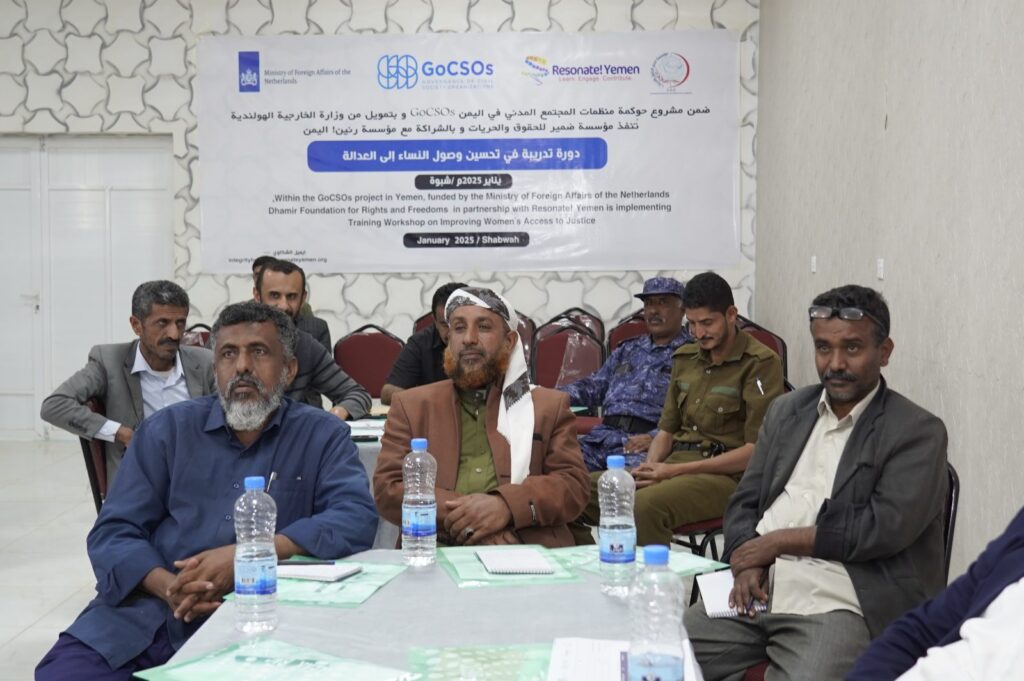
Funded by the Ministry of Foreign Affairs of the Netherlands and implemented by Resonate! Yemen between November 2022 and May 2025, the project’s overarching goal was to improve the governance of CSOs working on human rights, including women’s rights, in Shabwa and Marib. It pursued two specific objectives: strategically enhancing the organisational capacity, technical expertise and financial sustainability of human-rights CSOs; and increasing the contribution of human-rights organisations, including women’s-rights CSOs, to gender-transformative governance and social accountability. A conflict-sensitivity approach was built in to ensure that the project improved the situation without exacerbating existing tensions, and the project engaged relevant stakeholders to secure their acceptance and support. It was implemented in two participatory phases, with the second building on the first to deepen impact.
The project was grounded in research. An in-depth study of the human-rights context in Marib and Shabwa found that tribal structures and traditional cultural and social norms dominate local life, that most people turn to tribal customs to resolve disputes outside the formal justice system, and that the cultural and social constraints facing human-rights and women’s organisations outweigh political and legislative ones; it highlighted discrimination against the Muhamasheen and the low participation of women in human-rights organisations due to family and social restrictions. This study shaped the design of the project’s interventions. The project then advocated on several human-rights issues through six policy papers, four of which were published in 2024 and served as the basis for a Human Rights Conference organised by Resonate! Yemen: on the impact of customary law on the rule of law, oil pollution and its impact on the environment and human rights in Marib and Shabwa, enhancing women’s access to justice, and weaknesses in legal-protection mechanisms for human rights in Yemen. In 2025, two further policy papers addressed landmine contamination and the challenges facing internally displaced persons and refugees in Marib and Shabwa, followed by four webinars.
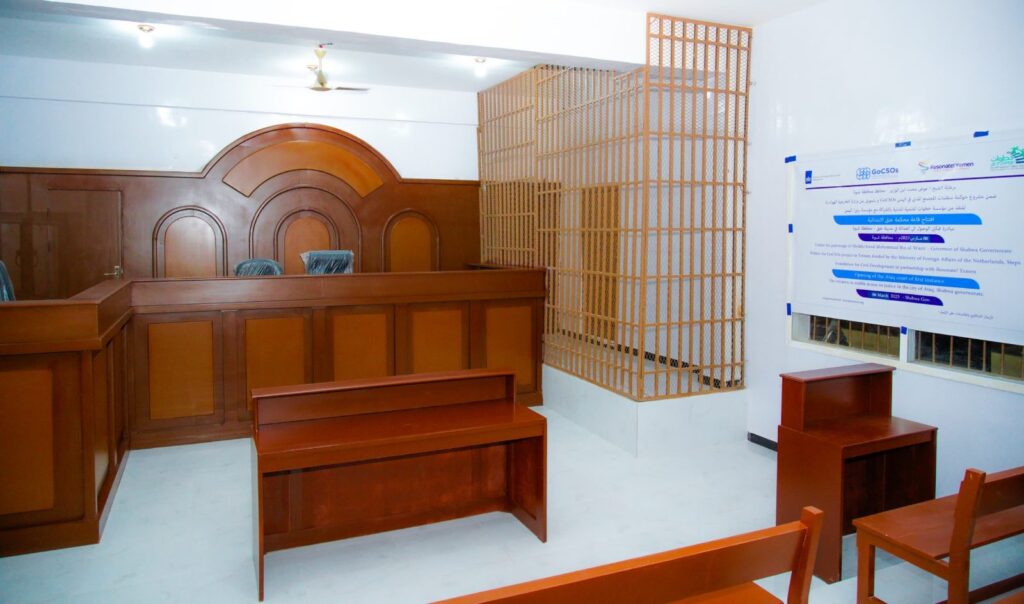
Partner CSOs translated their strengthened capacity into concrete change. Under the project, the Steps Foundation (Khotwat) rehabilitated the courtroom of the Ataq Primary Court in Shabwa within ninety days – improving lighting and ventilation and replacing worn furniture – and the court, according to its president, now also receives cases from other districts such as Habban and Jardan, with more lawyers keen to plead there and staff performance improved. The Protection Foundation for Civil Orientation, after receiving specialised training that reshaped its internal systems, responded to concerns raised in listening and accountability sessions by rehabilitating and equipping a waiting area for women inside Marib General Hospital – serving nearly fifty women a day – and launched the “Aafitak” application for booking appointments, which recorded nearly five hundred bookings and inquiries in its first month. In the second phase, partner CSOs implemented four community initiatives – two in Marib and two in Shabwa – benefiting 213 people, mostly women, and supporting institutions such as the National Women’s Committee, the Marib Hospital Authority, the Ataq Primary Court and the Shabwa Criminal Investigation Department; two advocacy initiatives improved women’s access to justice and local accountability. Partners describe the project as having improved their efficiency and effectiveness through institutional capacity building and enabled them to play a greater role in protecting human rights.
The project concluded with a two-day advocacy conference in Aden, attended by 40 participants including the Dutch Ambassador, which highlighted its outcomes and reinforced the role of CSOs in promoting human and women’s rights. In total, GoCSOs directly benefited 2,170 people (105 in 2023, 1,516 in 2024 and 549 in 2025).