Impact Maker is a youth-led peacebuilding and civic-engagement programme implemented by Resonate! Yemen with the support and funding of PAX. Its name was chosen to reflect the ability of young people and women to be the change that creates a positive impact in society. The first phase, implemented in Hadhramout from March to December 2022, aimed to strengthen the capacity of youth, CSOs and local councils to promote social accountability, women’s empowerment in policy dialogue, and youth participation in public affairs and decision-making, contributing to more inclusive peacebuilding and resilient communities.

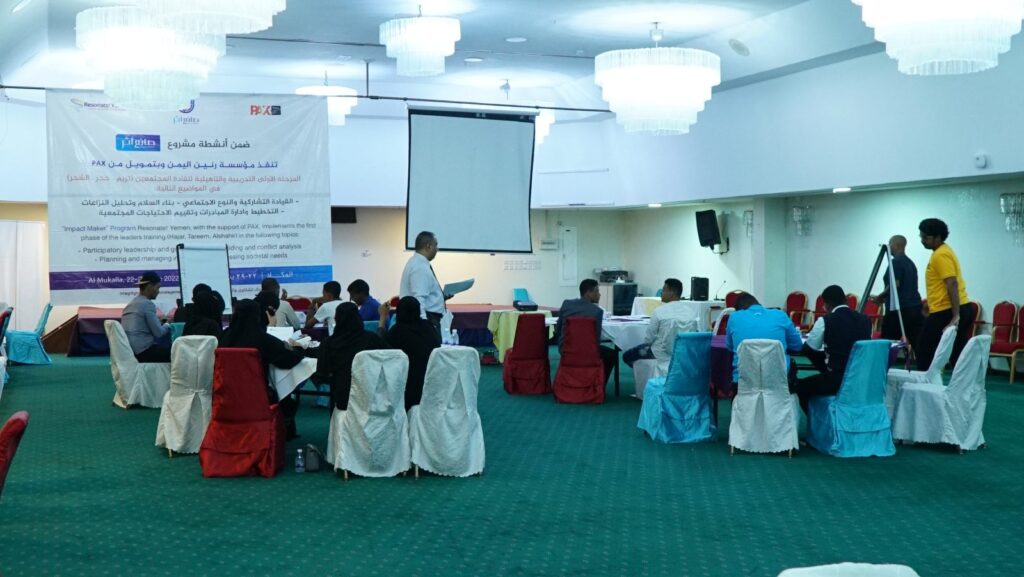
The phase set out to shape and reinforce young people’s technical capacities and to prepare them to be active community leaders and peacebuilders who take responsibility for the issues of their local communities and address them in coordination with local authorities and the community. Activities equipped participants with the skills needed to work with local communities, to understand the role of different peacebuilding concepts, to find opportunities for youth participation in governance processes, and to design advocacy and lobbying activities. Young people went through two training phases on leadership, governance, identifying community needs, project preparation, conflict management and gender, and formed a youth network of 21 young people, all of whom would contribute to designing and advocating public policies on peace and inclusive accountability. A further training phase was conducted for local councils in the three target districts, alongside workshops, networking and the exchange of experience among participants – which enabled young people to contribute to community development and lay the foundations of community peace in coordination with local-authority leaders and local and international organisations, and activated channels of communication between youth and local councils.
The project supported local councils by signing agreements of understanding and technical-cooperation programmes, including training for the staff of the local council and executive offices, and sought to stimulate citizens’ participation and progress in public-service provision. It resulted in three formal decisions establishing a Community Committee for Peace and Community Partnership made up of youth and the local authority, and twelve official memoranda of cooperation to facilitate young people’s fieldwork. Based on the outcomes of the training and of a roundtable between youth activists and local-council representatives, the best ten youth initiatives were supported to develop action plans, which included sharing assessment findings and consulting communities on proposed solutions. The initiatives addressed community needs identified by the youth, including interventions to strengthen women’s role in society and interventions in community safety, building on the advocacy issues developed in the training. Templates were developed to help plan and budget the initiatives, and the project team and consultant provided technical support and resources to help participants develop and deliver them.
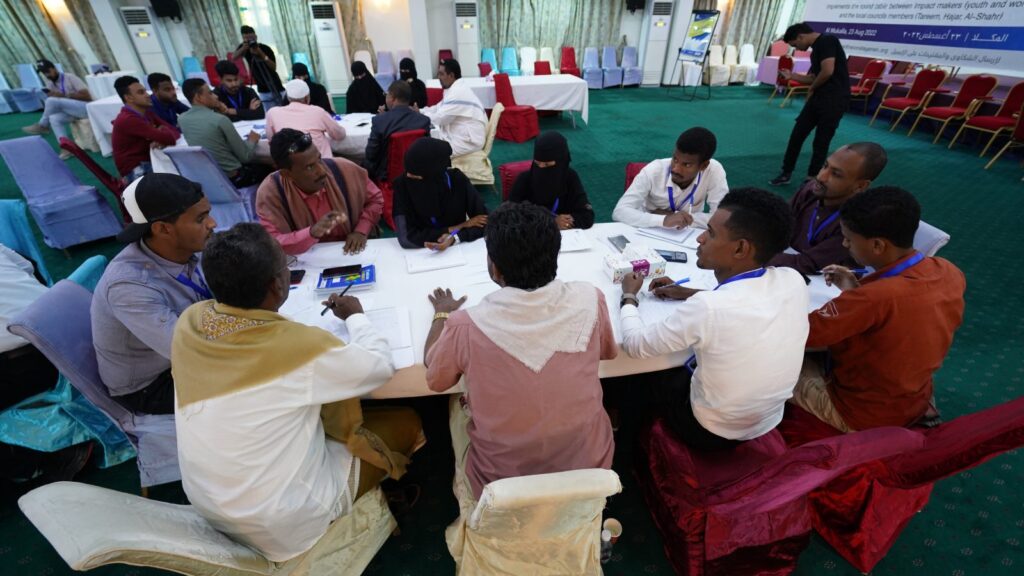
The phase directly trained 30 participants – 21 youth (9 women and 12 men) and 9 local-authority members – and its ten youth initiatives reached around 829 people (597 men and 232 women).